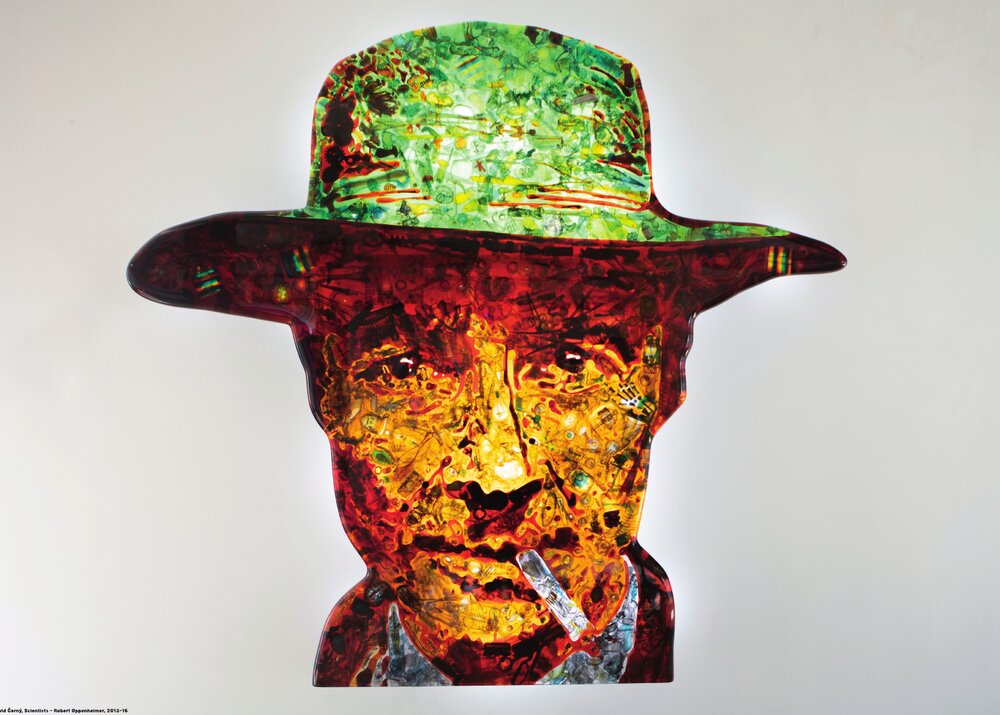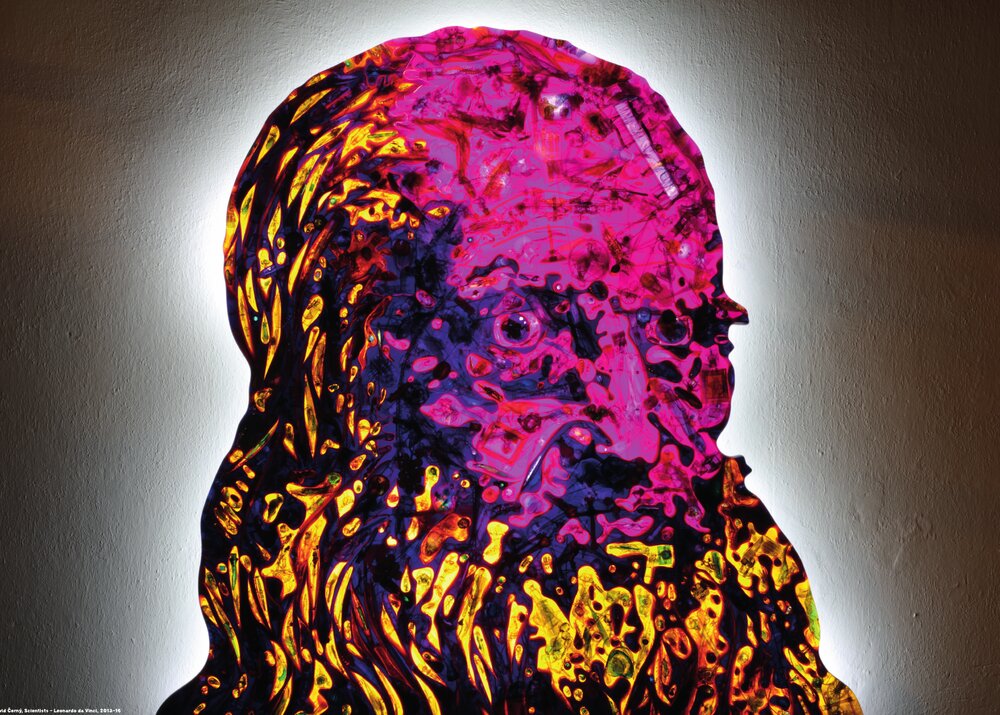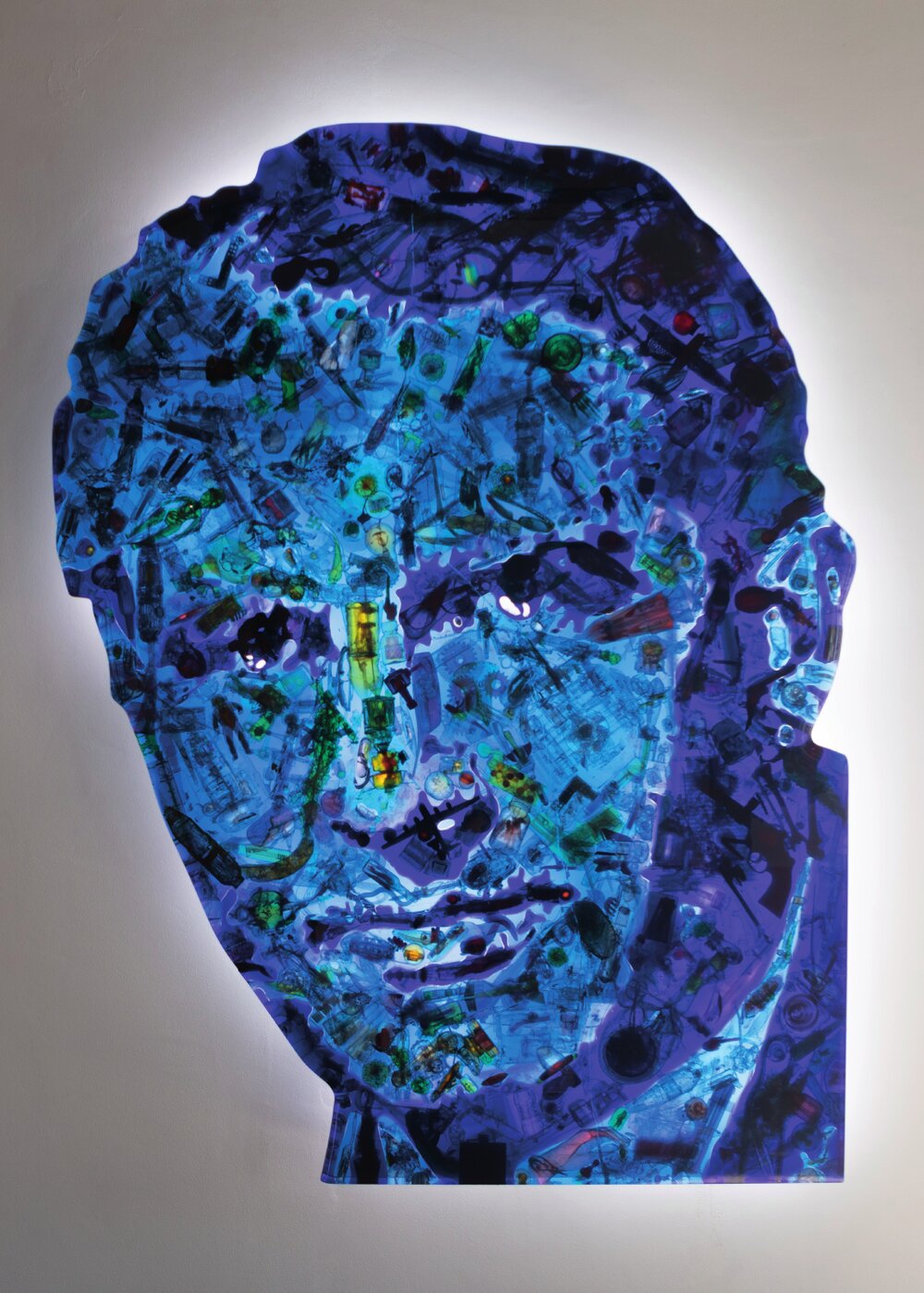
Throughout my life, weapons have repeatedly appeared in my work as a central phenomenon. They are a subject that fascinates me from many perspectives. Weapons have long stood — and will likely continue to stand — at the pinnacle of human technological achievement. At the same time, they represent the most destructive dimension of our existence.
Viewed through the lens of today's world, current political tensions, and widespread anxiety about the future, weapons emerge as a phenomenon of the highest urgency. Almost any globally devastating event — whether a pandemic, climate crisis, or economic collapse — ultimately risks escalating into armed conflict, a struggle for survival, and the inevitable presence of violence.
In my work, I examine weapons and their creators, users, admirers, and opponents from countless angles. This exploration is not static; as I return to the subject, my own inner space continues to evolve. Weapons are not only objects or tools in my work, but mirrors of power, fear, ambition, and the changing state of humanity itself.
David Černý, 2026
Few contemporary artists provoke reactions as instinctively as David Černý. His works are often described as ironic, satirical, or scandalous, yet behind their apparent provocation lies something more complex: a relentless exploration of the tensions that shape our collective consciousness. Černý's sculptures function less as statements than as mirrors, revealing the contradictions, anxieties, and hidden impulses that define contemporary society.
The exhibition Artocalypsa unfolds as an immersive environment exploring the trajectory of violence within human civilization. Černý approaches violence not as a singular event but as a continuum — what might be called "violence in transit." From the fragile spark of human inspiration to the immense technological systems capable of destroying it, violence follows a disturbing path through history. Tanks crushing masses of human bodies, mechanical figures rotating endlessly like flesh on a grill, and the looming presence of monumental war machinery evoke a world in which human invention and destruction are inseparable.
The installation constructs a powerful sensory arc in which image, sound, and movement converge. Mechanical rhythms, groaning bodies, and the cold logic of industrial force create an environment that is both unsettling and hypnotic. Yet Černý deliberately withholds resolution. There is no redemption, no comforting narrative, no clear horizon beyond the machinery of violence.
In this sense, Artocalypsa resonates with the tradition of Central European absurdity, echoing the philosophical spirit of Václav Havel, for whom absurdity was not the end of meaning but a catalyst for confronting it. Černý's work does not offer answers. Instead, it forces viewers to confront the contradictions of a world in which the same human ingenuity that produces art and beauty also creates systems of unprecedented destruction.
At the same time, Černý's practice functions as a kind of psychological experiment. His sculptures measure the reactions of society itself. What many perceive as provocation reveals something deeper: the unease we feel when confronted with our own shadows. In this sense, the viewer becomes part of the work.
Entering Artocalypsa is like stepping into a laboratory of the artist's mind — a space where chaos is guided by precision and where the boundaries between art, experiment, and philosophical reflection dissolve. Situated in the heart of Europe, the exhibition becomes both a reflection on the fragility of our civilization and a reminder that absurdity itself may still hold the possibility of meaning.